
A gruesome murder occurring on the beautiful streets of The City of Angels (Los Angeles, CA) has horrified the country since it occurred in the late 1940s. This devastating case remains cold to this day.
Overview of the Case
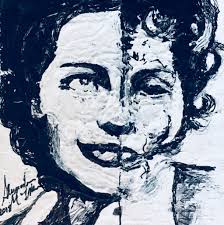
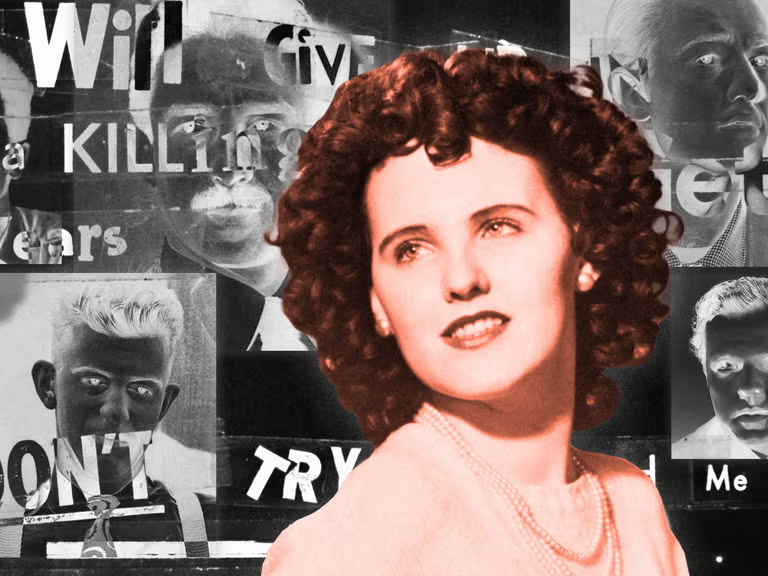
The Black Dahlia Case is centered around the death of 22 year old ‘Hollywood Hopeful’, Elizabeth Short. She was found cut in half, pale, her blood drained, with a horrifying Glasgow smile carved into her beautiful face. Betty Bersinger and her sleeping three-year-old daughter found Short’s body in Leimert Park, Los Angeles, CA, on the morning of January 15th, 1947. Elizabeth was born to Phoebe Mae and Cleo Short on July 29th, 1924, in Hyde Park, Boston, MA. Elizabeth’s early life was rough. Her family was poor, and her father left his wife to raise their 5 daughters after faking his own suicide. Elizabeth also moved between Florida and Massachusetts due to her poor health before moving to Vallejo, CA, with her father (after she found out he was alive). Eventually, she moved to Los Angeles later that year. Short struggled, trying to get any job she could before her death. The investigation into this case was full of chaos, revealing over 150 suspects (including a suspected serial killer/doctor), several false confessions, and a sort of ‘media frenzy’ that thwarted the investigation. Even after a great deal of effort was put into this case, nobody was arrested or convicted. Elizabeth Short, known as the ‘Black Dahlia’ or the ‘Hollywood Hopeful’, was killed after suffering years of hardship. At just age 22, she was lost to The City of Angeles.
Popular Theories & My Personal Theories
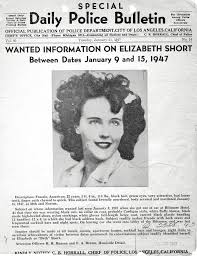
Numerous theories have been investigated and considered; many surround Dr. George Hodel. Hodel was a suspect in several homicide cases. He was also accused of being a serial killer by his own son, Steve Hodel. Dr. Hodel was a suspect in The Black Dahlia Case, The Murder of Ruth Spaulding (his former secretary who died of a drug overdose in 1945), and The ‘Green Twig Murder.’ Hodel’s son accused him of several other crimes, including being the infamous Zodiac Killer, who ‘operated’ in Northern California in the late 1960s and early 1970s. Elizabeth Short’s murderer is unknown, just like their motive. Theories about the killer’s motivation range from personal revenge to a serial killer, with some suggesting she was killed and positioned (after her death) to create a ‘masterpiece’, deeming her death art. The final, more out-there theory is that Elizabeth Short herself was a criminal. She could have been a con-artist or prostitute, stealing men’s money so she wouldn’t have to spend her own money. Out of all of the theories that have been proposed over the years, I agree most with the theory regarding the possibility that Dr. George Hodel was the murderer.
The Tigers’ Theories
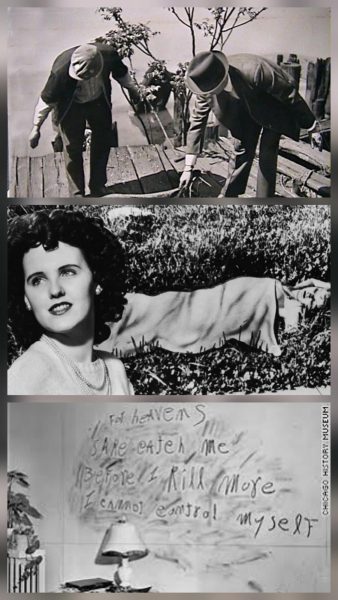
One Tiger-proposed theory is that George Hodel did commit the crime. Like I mentioned earlier, Hodel was a suspect in multiple homicide cases. Because he had a medical background, it is entirely possible that he committed the crime. He would have had the knowledge about how to commit a murder and hide/destroy any evidence efficiently. This is definitely a theory that I support given the numerous easy ways Hodel could’ve committed the crime. He also had the knowledge to effortlessly and efficiently perform the surgical cuts into Short’s body: the Glasgow smile, removal of organs, and the large cut in her torso. A second theory, proposed by another student, suggests that the Black Dahlia murder was connected to other unsolved killings, including the Lipstick Murders and the Cleveland Torso Murders. The Lipstick Murders, coined after the killer left behind the following message written with lipstick at the scene of the second crime: “For heaven’s sake, catch me before I kill more. I cannot control myself”, involved three brutal killings in Chicago. The Cleveland Torso Murders in the 1930s involved twelve confirmed victims, their bodies cut in half and heads amputated and hidden, crimes committed with surgical precision. The Cleveland Torso Murders remain unsolved today.
Details Regarding the Case Today
Today, the Black Dahlia Case remains officially open, with no ultimate evidence linking any suspect to the crime. In recent years, there have been efforts to analyze old evidence using advanced DNA testing techniques, but, so far, they haven’t produced a breakthrough or identified a killer. The case continues to attract attention from all kinds of people, including true crime enthusiasts, researchers, and amateur detectives. Numerous books, documentaries, podcasts, and online forums regularly revisit the details and propose new theories and suspects. The LAPD occasionally receives new tips and/or information but none have led to significant progress, and the case remains one of America’s most famous unsolved murders. As of 2025, public fascination continues, and the Black Dahlia remains a frequent subject in popular culture and true crime discussions, ensuring that interest in this case is continually renewed even after nearly eight decades.
Conclusion
The Black Dahlia Case remains one of America’s most shocking unsolved murders. In 1947, Elizabeth Short—the striking 22-year-old aspiring actress nicknamed “The Black Dahlia”—was found brutally murdered in Los Angeles. Her life, filled with hope and dreams of Hollywood stardom, was cut short in a crime so horrifying it transfixed the public and media alike. Despite exhaustive investigations and countless theories over the decades, the killer’s identity and motive remain unknown, leaving the case shrouded in mystery and speculation. Elizabeth Short’s story continues to haunt Los Angeles, symbolizing both the city’s golden glamour and its hidden darkness. The question endures: who killed the beautiful ‘Hollywood Hopeful’, and will the truth ever come to light? Each new theory adds to the myths, fueling both fascination and frustration for those who seek answers. As time moves on and evidence grows even colder, the Black Dahlia’s legacy lingers in the collective imagination—a haunting reminder of dreams lost, justice denied, and secrets that may never be uncovered.
Works Cited:
- FBI. “Black Dahlia.” Federal Bureau of Investigation, www.fbi.gov/history/famous-cases/black-dahlia.
- Goffard, Christopher. “The Black Dahlia Mystery: Wild Theories and a Long-Overlooked Suspect.” Los Angeles Times, 23 Oct. 2024, www.latimes.com/california/story/2024-10-23/black-dahlia-myth-reality-larry-harnisch.
- “FamilySearch.org.” Familysearch.org, 2015, ancestors.familysearch.org/en/KJ43-8NZ/elizabeth-short-1924-1947.
- Meher Tatna. “Forgotten Hollywood: The Mystery of the Black Dahlia Killing.” Golden Globes, 26 Apr. 2023, goldenglobes.com/articles/forgotten-hollywood-mystery-black-dahlia-killing/.
- Puffer-Rothenberg, Maureen. “EBSCO – Research Databases, EBooks, Discovery Service.” Ebsco.com, 2021, www.ebsco.com/research-starters/communication-and-mass-media/black-dahlia-murder.
- “Short, Elizabeth (1925–1947) | Encyclopedia.com.” Www.encyclopedia.com, www.encyclopedia.com/women/encyclopedias-almanacs-transcripts-and-maps/short-elizabeth-1925-1947.