
As of 2024, prediction market apps such as Polymarket and Kalshi have experienced an extreme surge in mainstream popularity. From less than $100 million per month in 2024, to over $13 billion by the end of last year in 2025, prediction markets have skyrocketed in their sales and user traction. With professional UFC fighter, Paddy Pimblett, promoting Polymarket through a chain, to the Golden Globes paid partnership with Polymarket, prediction markets have no doubt hit an all time high in prevalence and sales.

What are Prediction Markets?:
Prediction markets originated in 16th century Rome as informal betting, and then slowly evolved through the 19th and 20th century into political betting. The modern era of prediction markets slowly evolved with technological advancements as well as with digital platforms. As of today, the most famous prediction markets are Kalshi and Polymarket. Kalshi and Polymarket have been praised for allowing users to monetize their knowledge of certain subjects as well as for having a very wide range of subjects. On Polymarket, for example, prediction markets can range from the highest temperature in Chicago to whether or not the U.S will strike Iran by February 1st.
Ethical Concerns:
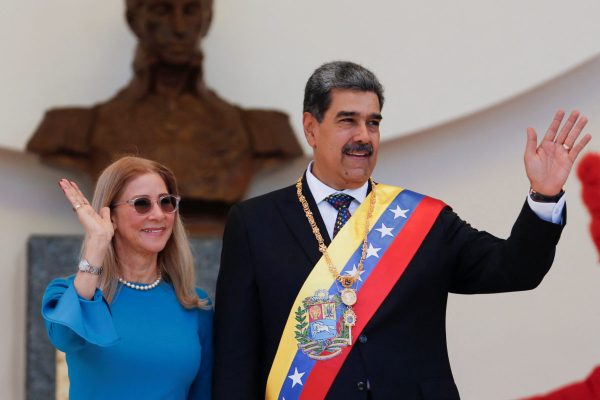
One ethical concern that surrounds these prediction markets is the prevalence of insider trading. On Polymarket, an anonymous trader turned $33,000 into $400,000 by betting on the kidnapping of Nicholas Maduro. Other traders recall the anonymous trader betting on the event 7 hours before it happened, creating intense suspicion of insider trading. Participants often fear competing against traders with superior, non-public information, causing the average trader to have the disadvantage.
However the true concern with insider traders in prediction markets is with the lack of consequences that they receive for doing so. Unlike in stock trade, the traders that engage in prediction market trading can sometimes be completely anonymous. While stock traders are heavily monitored for identity and surveillance; prediction market traders are allowed to use a VPN or cryptocurrency that can make it extremely difficult to track a prediction market insider trader. Stock insider trading also has severe penalties. These penalties can include up to 20 years of prison time as well as fines that can be up to $5 million. Currently, there are no existing federal laws in place regarding insider trading in prediction markets, though some states are taking measures to restrict or even ban prediction markets.
Legality Issues:
Prediction markets have also become very controversial outside of the trading sphere, with it raising legal concerns and some even calling it “glorified gambling.” Firstly, prediction markets are not really defined as gambling as they are more of a stock exchange rather than a casino, but this definition has come into question. The legality of prediction markets have continuously been debated, with it most commonly falling under a grey area. Particularly in the United States, prediction markets were largely taboo, and during the past two decades many prediction markets were restricted or prohibited in the U.S. Several states such as Illinois, Ohio, and New Jersey have issued cease and desist orders against these platforms, arguing they are illegal and unregulated.
Lesser known prediction markets such as PredictIt faced a forced shutdown in 2022 by the CFTC (Commodity Futures Trading Commission) for exceeding its intended small scale of academic and economic forecasting. PredictIt had racked up tens of millions of dollars across their hundreds of markets. Polymarket has also previously been banned by the Biden Administration. Polymarket had been “operating an illegal, unregistered…facility” according to the CFTC as well as for offering “event-based binary options” (high risk bets). The CFTC then imposed a $1.4 million penalty on Polymarket in 2022, but the app then relaunched a CFTC regulated beta version in 2025 following investigations being dropped. As of late 2025, Polymarket has focused on sports-related events, but they have plans to expand their markets into politics and crypto markets.

The Golden Globes:
Prediction markets have not only received criticism on their numerous ethical and legal concerns, but they have also infiltrated one of the most famous artistic awards: the Golden Globes. During the 2026 Golden Globes, Polymarket probabilities were integrated on the bottom of the screen as the nominees were being presented, with Polymarket users correctly predicting the winners of 26 out of the 28 categories. Audience members and social media users expressed frustration that this event expressing artistic achievements was being “gamblified” and described feeling distracted by the predictions, as they eliminated any form of suspense.

Conclusion:
Regarding prediction markets, there’s no telling how long they will last until they face another strike. With the mass audience and user base it has gained in the coming years, they most likely will not be going away anytime soon. As of 2026, prediction markets such as Kalshi, Robinhood, and Polymarket all have nationwide access in all 50 U.S states.
References:
Scanlon, K. (2026, January 23rd). The Dangerous Power of Prediction Markets New York Times https://www.nytimes.com/2026/01/23/opinion/prediction-markets-reality-democracy.html
CTFC (2022, January 3rd). CFTC Orders Event Based Binary Options Markets Operator to Pay $1.4 Million Penalty CFTC https://www.cftc.gov/PressRoom/PressReleases/8478-22
Stanford B. (2022, August 14th). There’s a Glorious Website Where You Can Bet on Politics, and the U.S. Is About to Kill It Slate
https://slate.com/business/2022/08/predictit-cftc-shut-down-politics-forecasting-gambling.html
Blatt B. and Fan. A. (2025, October 5th). Is Sports Betting Illegal in Your State? Not if You Call It a ‘Prediction Market’. New York Times
https://www.nytimes.com/2025/10/05/upshot/sports-betting-prediction-markets.html
Garcia R. (2025, January 10th). Nicolas Maduro sworn in for third term as Venezuelan President despite evidence of election loss PBS
https://www.pbs.org/newshour/world/nicolas-maduro-sworn-in-for-third-term-as-venezuelan-president-despite-evidence-of-election-loss