




















Have you ever wondered about the Great Barrier Reef everyone talks about? That “dying,” huge, coral reef in Australia that is a must see in your life. Well, I’m here to inform you about it! In this article, I’ll be delving into what the reef is, why everyone cares about it so much, and how YOU can help stop its (along with thousands of other reefs around the world) extinction.
What is the Great Barrier Reef?
The Great Barrier Reef was discovered in 1770 by Captain James Cook. It is the largest reef in the world, spanning over 1,400 miles! It is located off of the Queensland coast of Australia. This reef’s popularity came about immediately for not only its size but its vivid colors and amount of marine life inhabiting it. The Great Barrier Reef is home to more than 9,000 species of fish and mammals that inhabit the coral and shore.
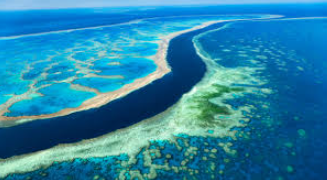
This is an aerial shot of a portion of the Great Barrier Reef. This reef’s size is underestimated: it is a massive 1,400 miles long, which is almost the length of 25,000 football fields!
What is all the buzz about the Reef?
Currently, due to global warming, the reef is becoming bleached and is rapidly decreasing in size and health. With the death of large amounts of coral, many species, including black rabbit fish, thread fin butterfly fish, and Coral Sea Gregory, have begun to flee the space towards cooler waters; most fish no longer can call it a home. Because of a mix of lower tides, solar radiation, and pollution, mass amounts of coral have been releasing a specific symbiotic algae that lives in their tissues, causing a drop in color as it is their main source of food. This process is called coral bleaching, and it is the main cause of the discoloration of coral reefs, not only the Great Barrier Reef but coral reefs all around the world.
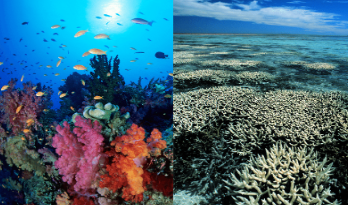
This is a comparison of the Great Barrier Reef in 2010 to 2020. As highlighted, the difference between the vibrancy of the two pictures is starkly different due to climate change and the process described above (coral bleaching).
Why is that important and what can I do?
As mentioned in the introduction, the Great Barrier Reef is home to over 9,000 species of animals, making up 25% of the known species in the ocean. This causes a great shift in population and biodiversity in our oceans. With coral bleaching causing many fish to get a fat eviction notice, many species are in danger of going extinct or are being threatened by the factor of not having a habitat to protect them or to get food. With the Australian coast being thousands of miles from the next reef(s), many fish who can only live in coral environments have died, causing the loss of grave amounts of species. To help keep the Great Barrier Reef in better health, scientists have taken many strides in maintaining species and trying to rejuvenate coral through things like breeding heat tolerant coral, freezing coral larvae for future restorations, and taking action against climate change and pollution.
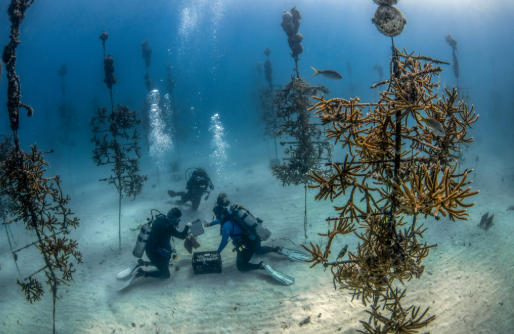
This is a photo of marine biologists working underwater on coral nursery trees. This has been a great stepping stone towards conserving coral reefs in the marine biology community.
What can you do, you might ask. Many people campaign towards doing simple things, like using more renewable energy, making sure you’re participating in ethical tourism that doesn’t damage habitats, and making sure littering doesn’t happen (and, if it does, then making sure you inform the person of its effect and that the trash is either recycled or thrown away). Just a little bit of effort and care can go a very long way!
References:
https://www.gbrbiology.com/knowledge-and-news/great-barrier-reef-timeline/