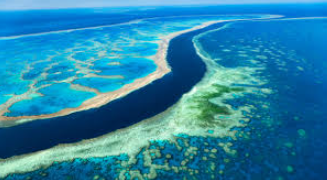


In media, movies, books, and stories, sharks have always been depicted as stone-cold killers. I mean, of course they’re scary! They come with hundreds if not thousands of teeth, can reach speeds of 30 mph in the water, and can grow to record sizes of 16+ feet. But, should they really be feared as much as they are? In this article, we will dive into the reasons to be cautious of sharks, why they bite, and how fear of them came to be.
All about sharks!
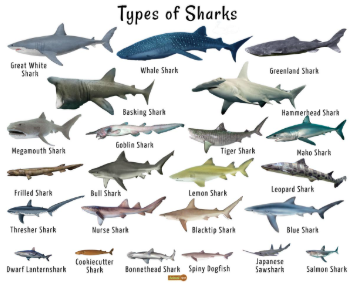
Sharks are one of the most interesting ancient creatures in the ocean, possessing many of their own unique qualities. Sharks characteristically have sand paper-like skin, rows of hundreds of jagged sharp teeth -to gnaw into prey- that constantly are replaced, two dorsal fins, and are a wide variety of sizes as there are over 500+ different species of sharks in the world spanning throughout the 7 oceans.
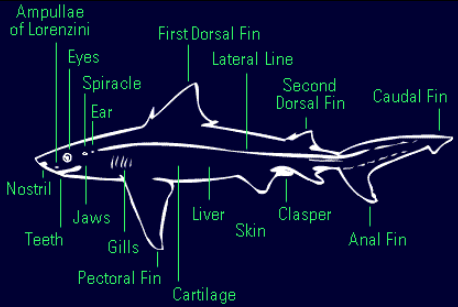
On their own, sharks have a very unique and notable way of hunting, believed to be like a sixth sense for finding prey. In the science world, this can more easily be defined as electroception. Electroception is the detection of electric fields produced by other organisms around them. The way they do this is through two filled pores on the nostrils of sharks called Ampullae of Lorenzini. These pores help sharks sense organisms up to 400 meters! That’s an entire lap around a standard outdoor track.
If they’re so cool, what’s wrong?
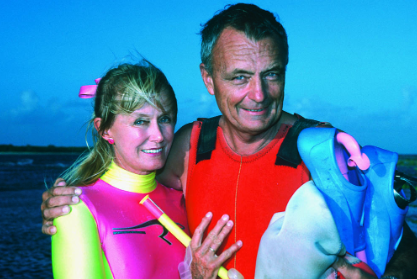
For hundreds of years, there have been at least 70 national shark bites recorded every year, some being fatal and some being life altering. These numbers and the appearance of sharks are causes for concern. They are large and of course dangerous, but these are not the main turning points in shark hatred history. In the 1970’s, Ron and Valerie Taylor began their journey towards shark and fish conservancy by filming, directing, and producing the notorious Blue Water, White Death in 1971– introducing, first of its kind, free diving with sharks and not just any sharks, Great Whites.
This caught the attention of none other than Steven Spielberg, the director and writer of Jaws, the number one shark film in the world. Spielberg was looking for real underwater shots that weren’t available with the technology they had. So, with the help of Valerie and Boris, the 15 foot mechanical shark in Jaws was created to be the scary film it is today. However, Valerie never wanted this type of attention being drawn to sharks. As an activist, she wanted the film to bring attention to the fascinating aspects of the ocean, not what to fear. With the aroused fear brought on by the film, people started to stop going to beaches. They drew horror images of sharks and read books about sharks and how dangerous they are. Many set out to hunt these beasts.
What’s wrong with people being scared?
Caution is always essential when it comes to the ocean. Us as a race have only discovered an estimated 7.8% of the ocean and actually know virtually nothing about it. So when there’s mention of 13 foot, 1,000 pound fish that bite at surfers, many run. The beautiful thing about the ocean though is that it is not ours. Sharks have been around for over 400 million years and survived more than 3 catastrophic events. Nonetheless, humans swim in their oceans and some even try to kill these wild animals for doing what they were created to do: live in the water. Humans swimming at populated beaches cause electrode waves; these are detected by sharks, even if the sharks are far out in the water. The waves lead the sharks to beaches. Once the sharks encounter humans, they bite as a way of “taste testing”, if you will, and usually swim away shortly thereafter. In fact, there is little to no record of sharks whole-eating humans; it is commonly believed that sharks actually dislike the taste of humans.
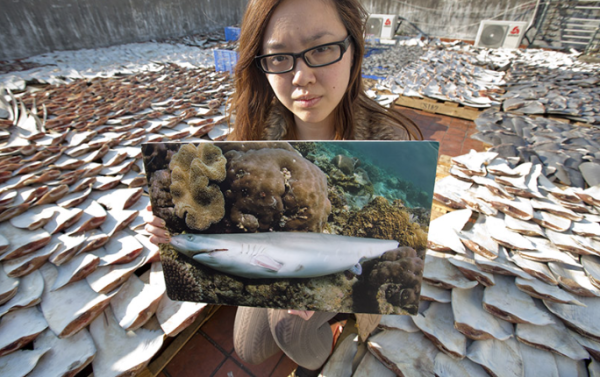
The image shown above is not stones but the result of an action drastically driving down the shark species: finning. Finning is a cruel and illegal way fishermen all around the world make money. They sell millions of dorsal fins and pectoral fins, nationally making a total of around $10.1 billion dollars every year; however, this at the cost of over 100 million sharks every year, driving down thousands of shark populations and even leaving some, such as the Hammer Head, Whale Shark, and Basking Shark (to name a few), endangered.
So, although sharks are thought to be scary human eaters, they really are just animals. Of course you must be cautious of them, but consider the fact that humans, alone, decide to enter the waters that for millions of years were theirs. Humans should not be surprised that sharks sometimes try to protect their home. So, before you fear sharks, ask yourself, are they really so bad?
References
- “What’s More Likely to Kill You than a Shark? | Gili Shark Conservation.” Www.gilisharkconservation.com, 20 Oct. 2018, www.gilisharkconservation.com/whats-more-likely-to-kill-you-than-a-shark/
- Shark trust. “Shark Anatomy.” The Shark Trust, 5 Nov. 2018, www.sharktrust.org/shark-anatomy.
- Ramsey, Ocean. “Ocean Ramsey.” Ocean Ramsey, oceanramsey.org/why-sharks.
Playing with Sharks: The Valerie Taylor Story. Directed by Sally Aitken, 29 Jan. 2021.