


Intro
Schools can be defined as “educational institutions that are designed to provide learning environments for the teaching of students.” They’re made up of a variety of things such as sports, clubs, classes, the students and teachers within the building, and importantly, the safety regulations. Safety regulations are implemented to ensure the safety of students and their learning environment. Most of these regulations come with a variety of pros but also come with their cons as they are looked at more carefully and are being passed to various schools apart from EPHS. As I’ve analyzed many of the most recent regulations in EPHS, I’m going to be breaking down the most significant ones that are shaping our everyday school lives, along with their pros and cons.
SmartPass
Starting off with something that is needed for almost every period of the day, SmartPass is a digital platform designated for K-12 schools that has replaced most paper and physical hallway passes to improve safety, locate students effectively including where they’re going and who they are, etc. This platform was introduced to the EPHS system at the beginning of the school year, and has provided a more organized way of allowing students to travel while providing them the ability to go wherever they need to go. As most things might have their pros, they also have their cons that follow behind them.
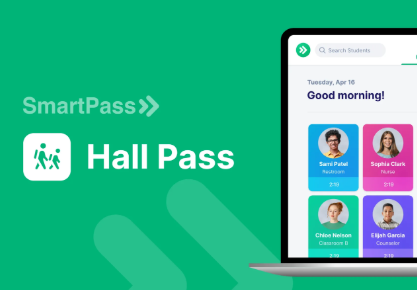
The pros of SmartPass include:
- Safety and Security: SmartPass allows for administrators to have a real-time update on where specifically students are at certain times and allows for keeping the hallways clear at specific times including in case of an emergency.
- Encounters: With this, administrators can prevent allowing certain students to be out in the halls at the same time, whether it’s students who have problems with each other or just specific students.
- Student accountability and analytics: The data processed by this system is created in logs per student that manage misuse and allow for administrators and teachers to identify students who miss excessive class time.
- Flexibility: Not only does SmartPass manage bathroom visits but also visits to the library, front desk, teachers, etc.
Cons:
- Time limit per pass: Many argue that certain passes only have a certain amount of time before it goes into overtime which could potentially get them in trouble with administration for missing class time.
- Limit of passes: While it’s rare for students to have to go multiple places throughout the day, it is not impossible for this to happen. When it does though, there is a limited amount of passes students can use, which is frustrating when there is an importance to the destination the student needs to reach.
- Time-consuming management: Some teachers believe that SmartPass is time-consuming to manage while teaching other students or using their time to study plan..
Privacy concerns: Many students believe it is an invasion of privacy as this system tracks every movement of students heading to their designated place.
Student Support Table
The Student Support Table is a recent regulation implemented in 2026 and is designed to help students who arrive late to school. This regulation also targets improving attendance and strengthening communication between school and home. While it just became a thing at our school, it has already provided support but also problems that follow.
Pros:
- Communication between school and home: This allows for parents to be mindful of their kids’ tardies and their late arrival to school, which allows for them to go to school earlier and on time
- Better Attendance: This new regulation allows for students to be more aware of their attendance and to be more successful when entering their first period.
Cons:
- More traffic by the desks: It has been recently reported that lines to call parents have moved into 2nd period, which causes disruption going to their next period and more tardies going into other classes.
- Less class time: With this time being wasted to call parents and get to their lockers, it minimizes the amount of time they have in first period to complete their assignments and focus on in person instruction and learning.
- Students have to pay for other students’ consequences: Many students rarely get to school tardy but when they do they’ll be affected by this regulation and could possibly bring them consequences at home.
New Schedule Changes
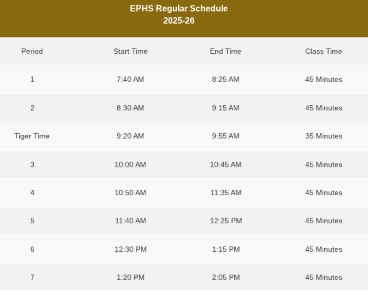
This new schedule was introduced at the beginning of the school year. With that, they squeezed the 5’s into another period and an advisory period called “Tiger Time” that will be mentioned below in the next policy. This schedule has proven to squeeze more electives into student’s schedules but followed up with some issues afterwards.
Pros:
- More time in school: Now while most students would consider this to be a problem or something not as ideal, this allows for more time for learning than the last schedule provided.
- More organized: This organizes schedules better than the confusing amount of 5’s in the periods that, to many, acted to many as “CSI” periods that were familiar in middle school.
- More electives being added into schedules: More electives are squeezed into these schedules that will also help for students to reach graduation requirements easier and effectively.
Cons:
- Lunch periods: Many have argued that the lunch periods aren’t even considered lunch periods when they start so early, these periods end at the 7th period and start in the 3rd period. Many students are crammed into full lunch periods with some being too small of a lunch period and for many securities and lunch monitors to deal with.
- Tiger Time: Tiger Time being the same thing as advisory is confusing for many and isn’t ideal when there are certain travel days and some days where they do need to travel and they are not able to.
- Extra Period: Many argue the idea of having an extra period in the day when they could just have kept the 5s which has already added up to a whole period.
No Advisory Mondays
While advisory was still squeezed into the early release schedule last year, this school year they decided to take it off completely and follow the early release schedule without advisory. While this still allows for an early dismissal, it could take away many opportunities for students.
Pros:
- Keeps the early release schedule: While there isn’t much information as to why they’d remove advisory or “Tiger Time” from the early release schedule, many don’t like the inclusion of Tiger Time. Those same people would rather keep it out of the schedule to ensure that they’d leave school early, and have more time in their other periods instead.
Cons:
- Support: Many students use Tiger Time as a time to travel to other classes to ask for support in their homework, make up a test, or gain some support from the people in their advisory.
- Time to finish homework: Many students use this time to get support from other students if they have trouble with homework or just use this time to finish because they don’t have time after school depending on conflicts at home or possibly athletics and clubs.
- Cooling Down: The students who don’t have homework use this time to cool down with other classes and the work they had provided them during class, many students only get this opportunity to possibly have certain students or friends on theirs in that advisory time and can’t see them throughout the day.
Conclusion:
Schools are the foundation for students and their learning. Creating a healthy and safe environment is crucial for students as they want to be able to come to school everyday and have a good word about it to their parents at home, whether school isn’t as easy for them or home isn’t their favorite place to come back to. With that, there are many regulations that are being implemented to support students and allow them to become more successful throughout their years there, as well as policies that are looked into for redeeming qualities and areas for improvement.
References:
- Raptor Technologies. (2018). Digital Hall passes for schools: Student accountability software. Digital Hall Passes for Schools | Student Accountability Software. https://www.smartpass.app/hall-pass?
- Jhager. (2026, January 16). Raising compassionate leaders: The role of homeroom teachers. Hoosier College and Career Academy. https://hcca.k12.com/blog/guidance-support/raising-compassionate-leaders/ Google.
- (n.d.). 2025-2026 EPHS student handbook.pdf. Google Drive. https://drive.google.com/file/d/1dFfRZ2yVeXzf3TQvGKvbNWyXmSH5xsuQ/view