


Patty Hearst is a name that’s connected to one of the most shocking and controversial stories in American history. Her kidnapping, transformation, and, later, trial fascinated the nation and raised many questions about crime, media, and psychology.
Who Was Patty Hearst?

Patricia Campbell Hearst, or “Patty,” was born on February 20, 1954. She grew up as an upper class citizen; she was the granddaughter of the famous newspaper capitalist William Randolph Hearst. Her family was very wealthy and influential, and she lived in beautiful homes and attended private schools. Despite her family’s fame, Patty was much like any other young woman her age. She liked reading, going to class, and spending time with friends.
The Night Everything Changed
It was the night of February 4, 1974. Patty Hearst was a 19-year-old college student living in an apartment in Berkeley, California. She was hanging out at home with her fiancé, Steven Weed. Suddenly The leader of the Symbionese Liberation Army, (SLA), Donald DeFeeze and two of his members William Wolfe and Emily Harris broke into her apartment.
The SLA was small but the members wanted to start a revolution and make big changes in America, even if it meant using violence. The group wanted to destroy what they called the “capitalist state” meaning destruction of the prison system, rent system, and corporate structures.
Patty was terrified. She had no idea who the kidnappers were or what they wanted from her. When they got to their destination, they locked her in a dark, tiny closet. She wasn’t allowed to talk to anyone and could only leave to use the bathroom. The kidnappers played loud music all the time, and Patty was alone except when someone brought her food. She had no idea if her family knew where she was or if she would ever get out alive. The SLA threatened her and said they’d kill her if she tried to escape or didn’t do what they said. For weeks, Patty lived in total fear, not knowing what would happen next.
The SLA finally told the world they had Patty. They made strange demands, asking the Hearst family to give millions of dollars worth of food to people in need across California. The Hearsts tried to do it, but it didn’t work out the way the group wanted. All this time, no one knew how Patty was doing or what she was going through. She was trapped and had no control over her life

Becoming “Tania:” Did Patty Change Sides?
After some time, the SLA stopped ignoring Patty and started talking to her about their ideas. They told her about their plans to fight the government and help poor people, but they also made it clear that she had to choose to join them or be their enemy. Still afraid for her life, Patty eventually participated in a recording, saying she was joining the SLA and even took a new name, “Tania.”
This shocked everyone. Some people believed she only did this to survive. Others wondered if Patty actually started to believe what the group was saying. The truth is nobody really knows for sure. Even today, experts argue about what was going on in her mind.
Patty as a “Member” of the SLA
Not long after, Patty was seen in public but not as a victim. On April 15, 1974, just over two months after her kidnapping, Patty was caught on camera during a bank robbery in San Francisco. She was holding a gun and shouting at people. This photo was in every newspaper and on every TV channel. Over the next few months, Patty was involved in more crimes with the SLA. She was seen robbing more banks and even in a shootout with police. Some people thought she was still just trying to stay alive. Others thought she had become a true member of the group.
Running from the Law

The SLA and Patty were on the run for more than a year. They kept moving around California, always trying to stay one step ahead of the police. The group hid in secret apartments and even camped out in forests. The police and FBI searched everywhere for them. At one point, some SLA members were killed in a big shootout with police in Los Angeles, but Patty was not present during this occurrence.
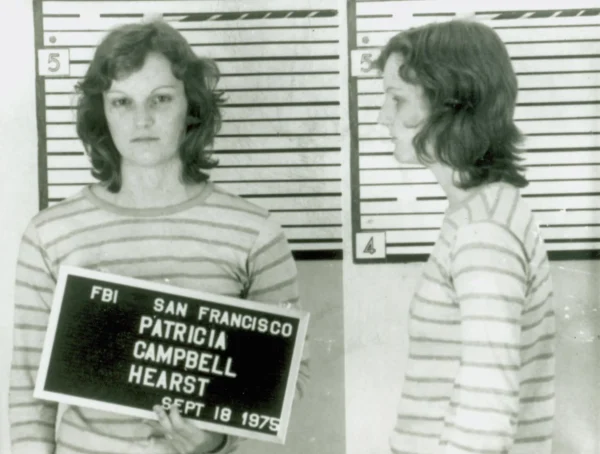
Finally, in September 1975, Patty was found and arrested in San Francisco. She was with other SLA members hiding in an apartment. After more than a year and a half, Patty was back with her family but now she faced big legal trouble.
The Trial: Victim or Criminal?
Patty’s trial was a huge event. The main question was: Did Patty really join the SLA or was she forced? Her lawyers said
Patty had gone through terrible trauma and had been brainwashed. They brought in doctors to explain how fear and threats can make people do things they never would have done. This is when lots of people learned about “Stockholm Syndrome,” which is when a kidnapped person starts to feel sympathy for the kidnappers.
But the prosecutors said Patty had chances to escape and never did. They showed recordings of her voice and photos of her helping with crimes. They said she was acting like a real member of the SLA. The truth was complicated; sometimes Patty looked scared and forced, but other times she seemed to really believe what the group was saying.
In the end, the jury decided Patty was guilty of robbing the banks. She was sentenced to seven years in prison. Many people thought this was unfair because she had suffered so much as a kidnapping victim. Others thought she deserved it, despite her family background.
After about two years, President Jimmy Carter let Patty out of prison early. In 2001, President Bill Clinton gave her a full pardon. Patty tried to live a normal life after that, but her story was always with her.
Why Patty Hearst’s Story Still Matters
Patty Hearst’s kidnapping and trial made people think hard about what it means to be a victim and how trauma can change the way someone acts. Was she just trying to survive, or did she really join the group? There are still no easy, clear answers, and her story is still studied today to help us understand how complicated real life kidnappings can be.
References
https://www.fbi.gov/history/artifacts/patty-hearst-kidnapping
https://www.bbc.com/culture/article/20260313-the-shocking-kidnap-of-a-teenage-newspaper-heiress