





















Intro
Thedore John Kaczynski, also known as “The Unabomber” (May 22, 1942 – June 10, 2023), was an American mathematician and terrorist. He was a professor at the University of California. He started teaching there in late 1967, before he later abruptly resigned in 1969 at only the age of 25 years old. After abandoning his academic career, he pursued a reclusive primitive lifestyle and lone wolf terrorism campaign. Kaczynski first came to the FBI’s attention in 1978 with the first explosion of his first homemade bomb at a Chicago university. “Over the next 17 years, he mailed or hand delivered a series of increasingly sophisticated bombs that killed 3 Americans and injured nearly two dozen more. Along the way, he sowed fear and panic, even threatening to blow up airliners in flight.” – The FBI

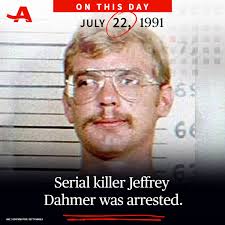
Ted’s mugshot, just an hour after his arrest.
In 1979, the FBI led a task force that included the ATF and U.S. Postal Inspection Service to investigate the “UNABOM” case. The name stands for “(UN)iversity and (A)irline (BOM)bing”. The task force would end up with more than 150 full-time investigators. They looked for anything that could lead them to the Unabomber, recovered bomb components, and studied the lives of victims in detail. The FBI felt confident that the Unabomber had been raised in Chicago and later lived in Salt Lake City and San Francisco areas. Even while very confident in where the Unabomber lived/was living, they still had no idea the gender or job of the bomber. They had thoughts that the Unabomber’s occupation ranged from aircraft mechanic to scientist. Investigators believed the bomber was most likely male.
The reason Kaczynski started his bombings was because of his anti-technology beliefs. He saw modern technology as a destructive force that alienated people from nature and suppressed the real true potential of humans. He believed that industrialization led to psychological suffering and was causing damage to people and the environment that wouldn’t be able to be fixed. Kaczynski had one goal: to destroy the industrial system and its technological progress. The bombings were intended to get public attention and force society to confront the issues he raised in an essay, where he detailed his ideology in what we now know today as the “Unabomber Manifesto.” In 1995, Kaczynski sent this 35,000 word essay titled “Industrial Society and its Future” to major newspapers, demanding it be published. The manifesto was arguing that technological progress strips human autonomy and would eventually lead to worldwide suffering. After a long, intense debate, The Washington Post and The New York Times published it, hoping the public exposure would help identify the author and prevent any further violence. This decision would later pay off. Kaczynski claimed that only a radical dismantling of industrial society could restore human autonomy. Scholars pointed out that while the manifesto raised familiar concerns about technology, it lacked scientific grounding and relied on very extreme generalizations. In the end, it served as a justification for terrorism. The manifesto is now studied as an example of how extremist thinking can escalate into real-world harm when being paired with isolation and willingness to use violence.
The FBI publishing the manifesto was a great decision; it reached some very important people that helped the case a lot. The most important person this manifesto gained attention from was David Kaczynski, Ted’s brother. David’s wife, Linda Patrik, read different parts of the manifesto and noted multiple similarities in language and ideas to those expressed in letters David had received from his distant brother. One unique phrase that stood out was “You can’t eat your cake and have it too”, an inversion of the common saying. David, who was initially very skeptical, read the manifesto and agreed that the tone and specific expressions were characteristics of Ted’s writing. The Kaczynski family then hired an attorney and ultimately contacted the FBI, providing them with the letters they received from Ted over the years.
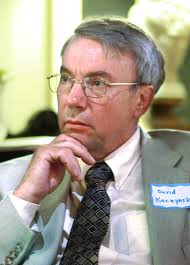
This is David Kaczynski years after his brother got arrested.
On April 3, 1996, FBI agents arrived at Kaczynski’s remote 10-by-14 foot cabin, deep in the woods near Lincoln, Montana. Inside the cabin, the FBI found a wealth of incriminating evidence. This incriminating evidence included…
- A live bomb ready to be mailed
- Bomb-making materials and components
- 40,000 pages of handwritten journal entries that included confessions to all 16 bombings
= 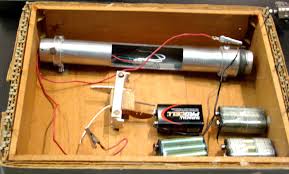
The live, ready to mail bomb that the FBI found while searching Ted’s cabin.
After searching Kaczynski’s cabin, the FBI indicted him. Kaczynski was indicted by a federal grand jury on more than a dozen federal charges, including 10 counts of illegally transporting, mailing, and using bombs, and 3 counts of murder. Kaczynski would later plead guilty to avoid the death penalty; he was sentenced to several life sentences without the possibility of parole.
After Ted’s arrest in 1996, he asked his public defender how the authorities found him. The lawyer reportedly told him “Oh, you didn’t know? It was your brother.” Ted initially refused to believe it, stating, “No, David wouldn’t do that”. Once he knew the truth, Ted’s focus shifted from his hatred toward modern society to his hatred toward his brother and the rest of his family. He refused to have any type of contact with David or his mother for the rest of his life, going as far as rejecting gifts and letters they would send to the prison for him. For almost 3 decades, David continued to write letters, hoping for forgiveness and reconciliation.
Conclusion
In June 2023, Ted was found unresponsive in his cell at the Federal Medical Center in Butner, North Carolina. Emergency responders attempted to wake him up but all attempts were unsuccessful. Ted was later pronounced dead at the hospital. The cause of death was suicide by hanging, with a shoelace used as a ligature. People speculate that the main reasons he committed suicide was because he was an 81 year old man stuck in jail for the rest of his life, suffering from depression and late-stage rectal cancer, which was the reason he was transferred to the medical facility in 2021.