




















Just as soon as Generation Alpha children are born into this world between the years 2010 and 2024, their first movements are reaching for the iPad, scrolling and swiping on any video they come across before they could even walk (though their exact birth years are often debated to begin in either 2013 or 2010). With every passing moment, these children become so immersed into scrolling through Youtube shorts on their screens, a world of constant entertainment that instantly blurs the real world outside of the screen to the point of forcing them into an endless cycle of scrolling and distracting them from necessary social interactions. Outside of this world within the screens, they are losing many crucial life skills that will help them prepare for their own future in the meanwhile: emotional regulation, communication skills, literacy skills, critical thinking, and the list goes on.
Academic Struggles
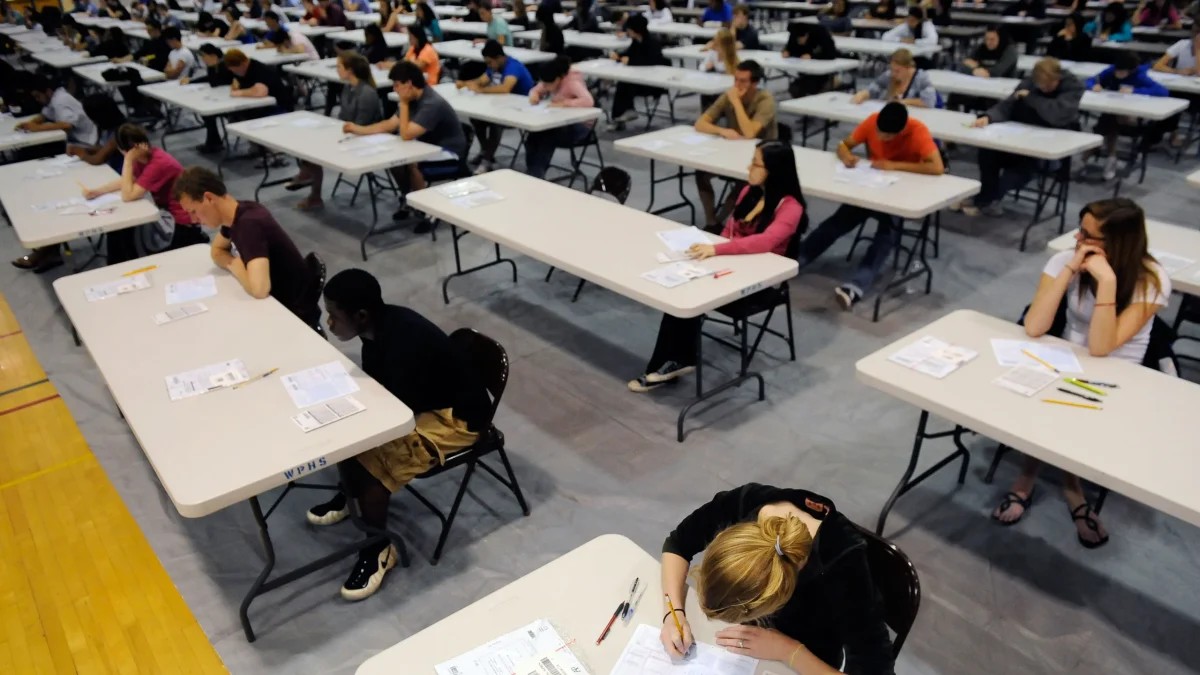
Ever since the COVID-19 pandemic, the youngest children of Generation Alpha have been struggling to navigate their first 5 years that shape their brain development through every interaction and conversation that they experience. According to the Nation’s Report Card, only 30.8% of fourth graders in Generation Alpha read proficiently in 2024, a regression to reading scores not yet seen since 1992. Much of this academic decline in academics can also be traced back to the three-cueing system, which has been used in schools since the 1960s that eventually replaced phonetics. Three-cueing is a method where three cues are utilized to guide a reader to easily figure out unfamiliar words: graphic cues, syntactic cues, and semantic cues rather than sounding them out just like in phonetics. According to Oxford Learning, graphic cues tell a reader to look at letters or word shapes surrounding an unfamiliar word, while syntactic cues tell a reader to analyze sentence structures to predict what the word could be. Semantic cues tell a reader to use context clues to predict what the word could mean. However, three-cueing presents many challenges throughout the reading process for a student since readers are forced to guess a word instead of decoding words and breaking them down into individual letters and sounds in phonetics so they can understand how to pronounce it and use it as part of their everyday vocabulary. In response to these children’s literacy struggles, schools have decided to have English classes focus on short passages and excerpts from books instead of reading from the full-length books to prepare them for standardized testing, using programs such as Study Sync.

To make things worse, over 50% of older Gen alpha children heavily rely on AI software like ChatGPT to complete their school assignments in a significantly shorter amount of time. All it would take for these children to complete their school assignments quicker is to take a screenshot of a specific question on their assignment to get an instant answer without having to think about it. To them, being able to understand a concept of a class doesn’t matter as long as they get their work completed.
There has been an increase in their struggles with fine motor skills among younger Generation Alpha children such as using the bathroom on their own or zipping up their own jackets without assistance from adults. 75% of preschool teachers report that these children are unable to properly use scissors, crayons, pencils, pens, and even tie their own shoes due to the accessibility of touchscreen technology.
The Evolution of Tween Culture
The years of being a pre-teen allow those who are experiencing a transition between childhood and adolescence to experiment with their style and make mistakes along the way as they experience significant physical, mental, and emotional changes at the ages of 8 and 13. The tween culture today isn’t like what it previously was in the past. In the past, especially in the early 2000s and 2010s, many beloved age-appropriate shows from Nickelodeon and Disney Channel were everywhere–Hannah Montana, iCarly, The Suite Life of Zack & Cody, and many more– that resonated with many pre-teens and defined the experiences of being a tween by having these characters be in a school setting and navigate their own identities and friendships at school with a sense of humor along the way. Unlike these influencers that tweens are currently looking up to, role models in the past included former Disney/Nickelodeon stars like Miley Cyrus, Selena Gomez, Demi Lovato, and Ariana Grande who were all around their same age at the time. However, Generation Alpha are no longer distinct from their teenage and adult counterparts, as they decide to skip their “awkward phase. Now, pre-teens today watch Netflix shows like Love Island, Wednesday, and Stranger Things that often include characters over the age of 18 who are experiencing mature themes and situations that the tweens won’t understand. Tweens today also listen to artists like Sabrina Carpenter and Olivia Rodrigo whose songs deal with many mature themes such as breakups and sexual content instead of the typical teen pop music. With the rise of social media influencers on various social platforms like Tik Tok, it is no surprise that these children would want to emulate these influencers by buying from high-end and adult-orientated brands like Sephora and Lululemon when they see the influencers wearing from these brands or simply recommending them for an intended adult audience. As a consequence of using these anti-aging products that have chemicals like retinol in it from retailers like Sephora and Ulta, they end up burning their own skin since oftentimes they’re not aware of what the ingredients are in the anti-aging products.
The negative stigma surrounding Generation Alpha and their excessive use of technology is understandable as they are experiencing significant academic and developmental problems, but it is important to understand that their future isn’t set yet. Generation Alpha is still developing, so things may be subject to change, including their dependence on technology. Many of this technology that they have access to that many other generations weren’t able to access can be used to help these children to maximize their own potential and help them with their struggles, if used and managed properly. Ultimately, parents and corporations are to be responsible for these struggles that Generation Alpha is facing.
References
Annie E. Casey Foundation. (2020, November 24). What is Generation Alpha? Annie E. Casey Foundation. https://www.aecf.org/blog/what-is-generation-alpha
Gen Alpha are ready to spend – and they want to be treated like adults. (2024, February 27). BBC. Retrieved March 17, 2026, from https://www.bbc.com/worklife/article/20240226-gen-alpha-spending-power-shopping-trends
Goldstein, D. (2025, December 12). Kids Rarely Read Whole Books Anymore. Even in English Class. The New York Times. Retrieved March 17, 2026, from https://www.nytimes.com/2025/12/12/us/high-school-english-teachers-assigning-books.html
Greene, P. (2023, August 26). The Atomization Of Literature: How Standardized Testing Is Killing Reading Instruction. Forbes. https://www.forbes.com/sites/petergreene/2023/08/26/the-atomization-of-literature-how-standardized-testing-is-killing-reading-instruction/
Growing skincare use by children is dangerous, say dermatologists. (2024, January 26). BBC. Retrieved March 17, 2026, from https://www.bbc.com/news/health-67993618
Hayley, H. (2026, January 14). Teachers EXPOSE Gen Alpha Is Getting Worse In School… Youtube. https://youtu.be/nlupLzLWp04?si=rCt8Ntn9i8bt0Tpw
Heubeck, E. (2026, March 13). Toileting and Tying Shoes: Young Students Increasingly Lack Basic Skills. Education Week. Retrieved March 17, 2026, from https://www.edweek.org/teaching-learning/toileting-and-tying-shoes-young-students-increasingly-lack-basic-skills/2026/03
Oxford Learning. (2025, February 7). Why the “Three Cueing” Method Fails New Readers. Oxford Learning. https://oxfordlearning.com/why-the-three-cueing-method-fails-new-readers/
Reading: Reading Results. (n.d.). The Nation’s Report Card. Retrieved March 17, 2026, from https://www.nationsreportcard.gov/reports/reading/2024/g4_8/
Sidoti, O., Park, E., & Gottfried, J. (2025, January 15). Share of teens using ChatGPT for schoolwork doubled from 2023 to 2024. Pew Research Center. Retrieved March 17, 2026, from https://www.pewresearch.org/short-reads/2025/01/15/about-a-quarter-of-us-teens-have-used-chatgpt-for-schoolwork-double-the-share-in-2023/
Understanding Generation Alpha. (n.d.). McCrindle. Retrieved March 17, 2026, from https://mccrindle.com.au/article/topic/generation-alpha/generation-alpha-defined/