























What is a Valedictorian?
Graduation is upon us and as a soon to be 2026 graduate, I can’t wait to see who our class valedictorian is! Your graduating class’ valedictorian is the student that gives you that inspirational goodbye speech to send you off into the sunset. Whether their speech sticks with you is your choice. Earning first in your class is seen as, probably, the biggest achievement over the course of your high school years.
Fortunately, if you don’t earn the valedictorian spot, you also have the chance at being the salutatorian! Even though the salutatorian is the runner up to the valedictorian, that doesn’t mean their job is any less important! Graduation should start just as strong as it ends, so the salutatorian’s job is to give some opening words to the class. Now, for the sake of time, we’ll specifically be covering valedictorians.
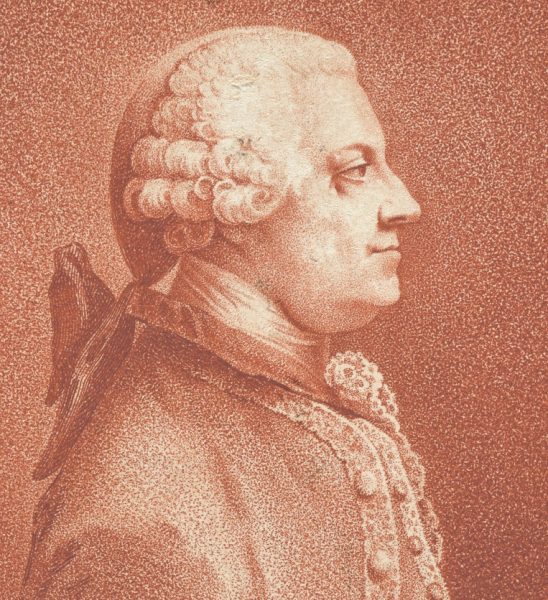
On that note, have you ever wondered where this tradition came from, and why the person with the highest GPA over the course of four years is called a “valedictorian?” Well, way back in 1772, a British politician, Norborne Berkeley – once known as Lord Botetourt – moved from England to serve as Governor of Virginia. Overtime, Norborne showed great interest in the colony and college; he showed his fondness for the school by putting up a gold medal as the prize awarded to the student most skilled in Latin written composition and speech. The selected student was labeled the ‘valedictorian’, which stems from the Latin term ‘vale dicere’ (combining ‘valere’, meaning “be strong/farewell”, and ‘dicere’ which means “to say”). All put together, ‘vale dicere’ means “to say farewell.”
The Public’s Perspectives on the Valedictorian System
Since this is quite an old tradition, over the years people have severely questioned whether or not valedictorians are fair or even needed. What started as an appreciation for the schools themselves and hard work from students has now turned into a wide debate of right and wrong. Some argue that it’s just a title and that “those with high-class rankings aren’t guaranteed to change the world”, which was written as the title of a section within The Scholarship System’s article. A researcher at Boston College, Karen Arnold, decided to follow the progress of those who graduated at the top of their class to see what had become of their futures.
Out of 81 valedictorians and salutatorians, research showed that most were successful. Of the group, 95% graduated from college and had an average GPA of 3.6. A total of 60% earned a master’s degree, almost 90% of students held professional careers, and 40% reached the top of their field. While these people were considered successful and kept good lifestyles, none of them achieved what Arnold referred to as the “very top of adult achievement arenas.” With these statistics, the question had to be asked, “If those with the highest class rankings represent the best and brightest, why aren’t they making a bigger impact on the world?”
Arnold came up with two reasons: 1) Doing well in school and reaching the top of the class is based on following instructions or “doing what you’re told”. 2) Simply being named valedictorian or salutatorian doesn’t account for a student’s level of passion or expertise. In Arnold’s words, “Essentially we are rewarding conformity and the willingness to go along with the system.”

On the other hand, there are people who still agree with the valedictorian system. Some say that this system is needed to effectively acknowledge the academic excellence of the highest ranked student. It’s argued that the recognition of this student serves as a powerful motivator for other students and shows that hard work does pay off. Another argument is that the personal commitment and sacrifice a single student makes to achieve this status shouldn’t go unnoticed. Valedictorians are often seen as leaders for demonstrating the ability to excel academically, while often also participating in other school-wide activities. It’s widely argued that the valedictorian achievement is not just about grades but also about the character and leadership skills they might have developed along the way. Most importantly, however, is that having the valedictorian system in place is seen as a great encouragement for academic culture. The recognition of valedictorians can strengthen a school’s reputation.
What do our Tigers think?
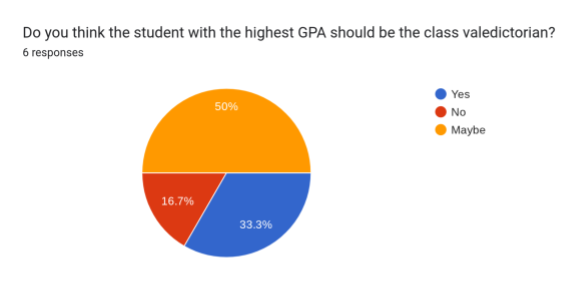
You can search online all you want for what people’s opinions are on this topic, but why not hear from some of our Tigers? I sent out a Google Form that posed the question, “Do you think the student with the highest GPA should be the class valedictorian?” Out of the few responses I got, 2 people voted ‘yes’, 3 voted ‘maybe’, and 2 people voted no. The Form also asked for an explanation on why they chose their answer, and we’ll look at some of those responses.
Both students who voted ‘yes’ stated that there is other recognition for non-GPA related accolades, so valedictorians should be strictly based on academics. One student stated that it would be absurd to change the way valedictorian selections are made because it defeats the purpose, definition, and recognition that comes with the title of class valedictorian.
For the students who voted ‘maybe’, a couple different answers were given. One student said that class ranking by GPA creates pressure for students to take as many AP classes as possible, even though some of those courses are irrelevant to a planned career or are just uninteresting. They go on to say that electives, such as band or art, are seen as less valuable to academic achievement and that causes “GPA inflation,” when GPAs are not fully representing a student’s true academic success. This student suggested that AP classes should have placement tests, a GPA boost similar to honors classes, or students should be ranked on their investment in particular subjects combined with academic well-roundness to ensure a better, more equitable system. Another student stated a similar thought: you don’t always know how a person achieved a high GPA. For all we know, that particular student could have forged it by completing assignments with AI as their main source.
The last responses came back as ‘no’, with one explanation being that the valedictorian system only shows someone is better than all the others. They said that grades don’t equal a person’s level of knowledge and that everyone is great in their own way.
My Thoughts on the Topic
When it comes to valedictorians, I personally don’t agree with the system. I agree with one of the student responses: that it creates an environment that pressures students to care about the numbers and not about what you learn. I believe that if not done right, trying to be your class’ valedictorian can put too much on a student’s plate, thus adding too much stress for one person to handle. Though I agree with the fact that competing for valedictorian effectively sets up challenges that may similarly be faced in one’s future line of work, is the stress and potentially toxic environment worth it? While researching this topic, I found that most high schools have actually done away with this antiquated system. In finding that fact, it further led me to no longer support the valedictorian and salutatorian system.
References
McGee, K. (2024, October 2). The Importance of Valedictorian Recognition at Graduation – StageClip. StageClip. Retrieved May 5, 2026, from https://stageclip.com/the-importance-of-valedictorian-recognition-at-graduation
The Scholarship System. (2025, July 7). Valedictorian? Salutatorian? Do Class Rankings Matter? The Scholarship System. Retrieved May 5, 2026, from https://thescholarshipsystem.com/blog-for-students-families/valedictorian-salutatorian-class-rankings-matter/
Thelin, J. R. (2019, May 14). Long considered a high honor, the valedictorian tradition faces an uncertain future. The Conversation. Retrieved May 5, 2026, from https://theconversation.com/long-considered-a-high-honor-the-valedictorian-tradition-faces-an-uncertain-future-115789