
























Throughout history, psychologists have conducted experiments to better understand how the human mind works. Many of these studies have led to important discoveries, while some have raised ethical concerns. A number of psychologicaly experiments became famous not only for their scientific discoveries, but also for their controversies surrounding the ways participants were treated. From studies of obedience and authority to experiments that pushed the limit of human behavior, these experiments revealed how impactful psychological experiments can be while also exploring how they might raise ethical concerns.
Little Albert Experiment:
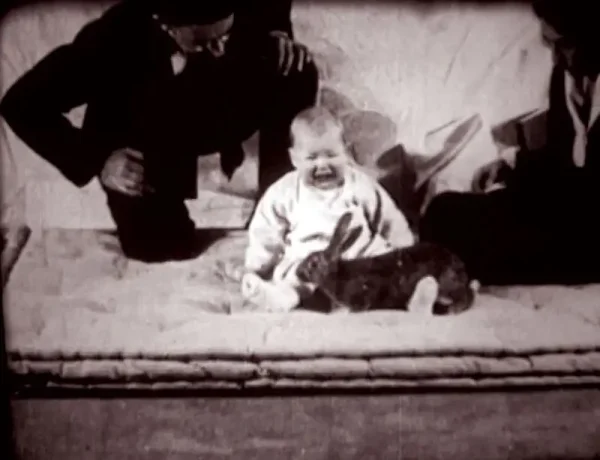
The Little Albert experiment is a more well known psychology experiment, performed in the 1920s by Watson & Rayner where they tested classical conditioning on an infant. They sought to prove that emotional responses–specifically fear–could be learned through association. In this experiment, Albert(the infant), was presented with many objects, the most well known being a white rat. Alongside the white rat, the experimenters would clang a metal bar and a hammer, inducing a response of fear in the baby. They would continue to do this until the rat on its own would scare the baby. The experiment would be used to apply to how phobias can develop in individuals. Later reviews on the experiment would criticize the lack of consent as the subject was an infant, failure to reverse the induced fear, and for poor methodical procedures since there was no control group meaning that they could not explain any alternative reasonings for Albert’s reactions. The identity behind the child is still debated.
Milgram’s Obedience Experiment:

Between the years of 1961 and 1962, Milgram’s Obedience Experiment was performed by Stanley Milgram under Harvard’s Department of Social Relations. This choice was an unusual choice as Milgram had never taken a psychology course prior to conducting the experiment, but would soon speed up in the course of social psychology after this experiment. This experiment explored the extent to which individuals would follow orders from an authority figure, even if it meant inflicting pain on others. Participants who were unaware of the purpose of the study, were assigned to the role of “teacher” and were instructed to administer electric shocks to “learners” (actors) who gave incorrect answers, even if the learner was visibly in distress. The experiment found that more than half of the participants–65%– were willing to exhibit the maximum amount of electric shocks (450 volts) to the learner when prompted by the experimenter. Ultimately, this experiment highlighted how authority shapes behavior. This experiment raised ethical concerns since participants were not informed of their role and were placed in stressful scenarios. Milgram rebuttalled these claims, stating that no one had been harmed during the experiment and provided a survey in which 84% of the participants stated that they were “glad” or “very glad” to be a part of the experiment.
Stanford Prison Experiment:

This experiment was performed in 1971 by Philip Zambardo, a psychology professor at Stanford University where participants engaged in a prison simulation to observe the psychological effects of prison life. The participants included 24 healthy, intelligent, middle class males who were split into two groups of “prisoners” and “guards” in which the prisoners had to wear a fake bald cap and were given a number to identify them. This experiment is notorious for being terminated early due to the abusive nature of the “guards”. The guards were not specifically trained to be guards, and instead were told by the experimenters to do whatever necessary to maintain the law. There were many forms of punishment that prisoners endured, some of which included push-ups, humiliation, and being made to wear bags over their heads. Eventually, Philip Zambardo would have to step in and stop the experiment after the abuse of the prisoners had gone too far. This experiment would be controversial due to strong ethical concerns, as some of the events that took place could traumatize prisoners. Many also criticized it due to the guards never being taught to be humane.
Conclusion:
These experiments, from Milgram’s shock experiment to the Stanford prison experiment, serve as a reminder to why modern ethics boards exist within the psychology and science communities. While they uncovered some revelations that inspired future experiments, they also taught us that in the pursuit of knowledge, we should never justify the psychological harm of participants. Today, psychology prioritizes the safety of the individual over the curiosity of the experimenters.
Sources:
McLeod, Saul (2025, September 9th). Little Albert Experiment (Watson & Rayner). SimplyPsychology https://www.simplypsychology.org/little-albert.html
Hall J, William. Stanley Milgram, Obedience to Authority. Harvard University https://psychology.fas.harvard.edu/people/stanley-milgram
Tandy T, Lewis. (2024). Milgram Experiment. EBSCO https://www.ebsco.com/research-starters/health-and-medicine/milgram-experiment